Two numbers, two purposes
IDC (Indian Driving Cycle) is a standardised laboratory test used to certify vehicles. Every manufacturer uses it, so it is useful for comparing scooters with each other — but it is gentler than real roads.
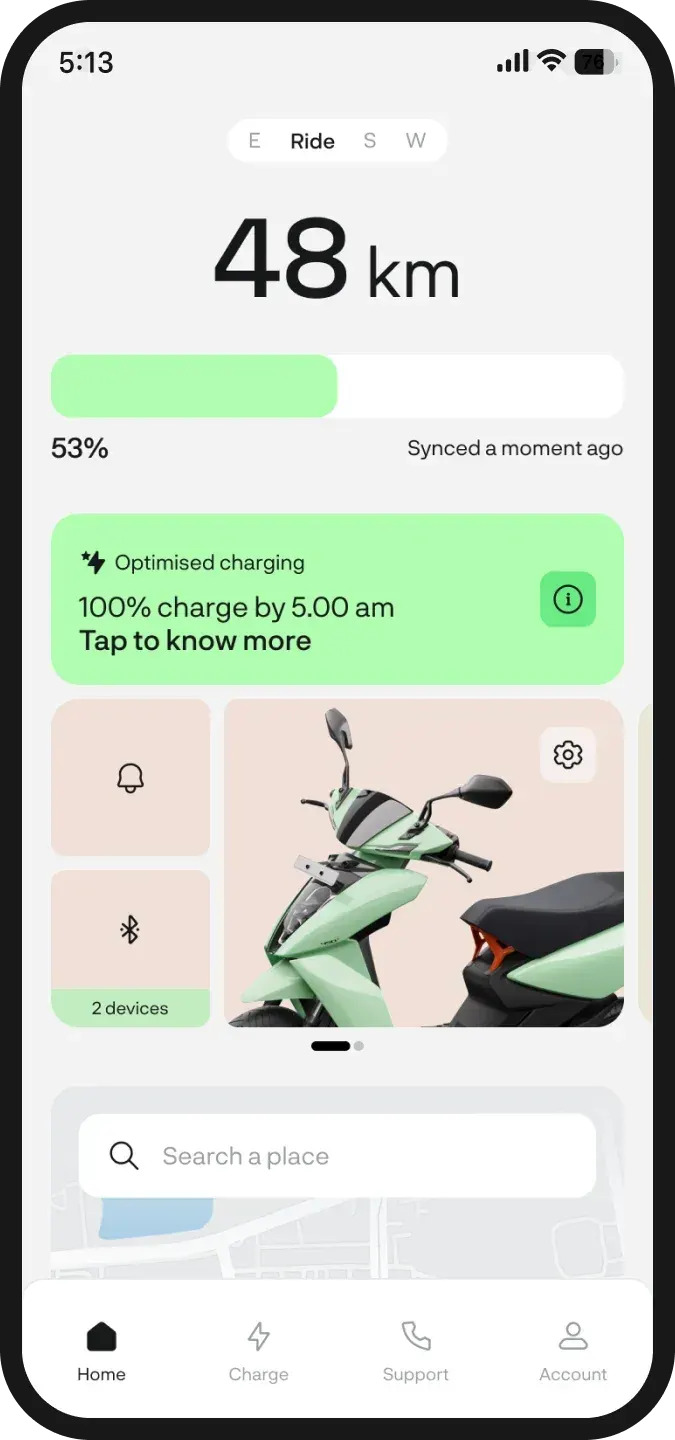
TrueRange is Ather's own estimate of what a typical rider will see in mixed real-world riding. It is the number to plan your day around.
Every Ather, both figures
| Model and battery | IDC range | TrueRange |
|---|---|---|
| Konarc S 2.1 kWh | 100 km | 80 km |
| Konarc S 2.7 kWh | 125 km | 100 km |
| Konarc S 3.5 kWh | 161 km | 130 km |
| 450S / 450X 2.9 kWh | 122 / 126 km | 105 km |
| 450S / 450X 3.5 kWh | 161 km | 130 km |
| 450 Apex 3.5 kWh | 165 km | 130 km |
| Rizta, smaller battery | 123 km | 100 km |
| Rizta 3.5 kWh | 161 km | 125 km |
What changes your range
- Ride mode. Warp and Sport use far more energy than SmartEco and Eco.
- Speed. Range drops noticeably above 60 km/h.
- Load. A pillion and a full boot add weight the motor must move.
- Stop-start traffic. Repeated hard acceleration costs more than steady riding — though regeneration recovers some.
- Tyre pressure. Under-inflated tyres quietly eat range.
- Heat. Very hot afternoons and a battery left in direct sun can trim range slightly.
Getting closer to TrueRange or beyond
Smooth throttle, SmartEco mode, correct tyre pressure and steady speeds will usually get you to the TrueRange figure and sometimes past it. Our range tips guide goes through each in detail.
Questions we get asked
TrueRange is Ather's own estimate of real-world range in typical mixed riding, as opposed to the IDC laboratory figure used for certification.
The IDC test cycle is gentler than real traffic: lower average speeds, no pillion and controlled conditions.
With the 3.5 kWh battery, the Konarc S, 450S, 450X and 450 Apex all have a TrueRange estimate of about 130 km; the Rizta 3.5 kWh about 125 km.